


Blog
Caution! Beginner beekeeper

Bitininkystė daugeliui atrodo kaip ramus ir romantiškas užsiėmimas – saulėti rytai bityne, bičių dūzgimas, gamtos artumas ir pirmasis šaukštelis savo medaus. Tačiau už šio vaizdo slypi kur kas daugiau. Norint, kad bičių šeima būtų stipri, o bitininkavimas teiktų džiaugsmą, reikia ne tik entuziazmo, bet ir žinių, tinkamų įrankių bei pasiruošimo.
Jei svarstote įsigyti pirmąjį avilį ar tik pradedate domėtis bitininkyste, natūralu, kad kyla daugybė klausimų. Kokios įrangos prireiks? Kaip išsirinkti bičių šeimą? Kada geriausia jas apgyvendinti naujame avilyje ir kaip išvengti dažniausiai pasitaikančių pradedančiųjų klaidų? Atsakymai į šiuos klausimus padės pirmuosius žingsnius žengti kur kas drąsiau.
Šiame straipsnyje dalijamės svarbiausiais patarimais pradedančiajam bitininkui – nuo būtiniausių įrankių ir bičių įsigijimo iki avilio paruošimo bei pirmojo medaus sukimo. Kuo geriau pasiruošite pradžioje, tuo daugiau džiaugsmo suteiks pažintis su bitėmis ir jų kuriamais gamtos stebuklais.
A beekeeper without tools is like a shoemaker without shoes
Jei užsiimsite rimta bitininkyste, o ne tik laipiosite po dreves ir vagiliausite iš laukinių bičių honey, it would be useful to have a few tools for a smoother workflow. Probably the most important tools for beekeepers are the hive and the frames with framed wax plates, which we wrote about in last month’s issue, so here we will discuss other equally important tools that are not so easy to make but are always available in beekeeping shops. Yes, yes, you have just learned that there are beekeeping shops as well as fishing shops. Or maybe you even have one right near you. So, to start beekeeping, you will need a broom and a chisel – the scepter and sword of the king bee. Manage your hive responsibly with these tools: use the broom to sweep the bees off the combs or the hive walls so that no subordinate is injured in the unequal struggle; use the chisel to work firmly and confidently to separate the frames from the hive, to loosen bee-clogged gaps and to remove the frames without causing unnecessary chaos without the chaos of an earthquake.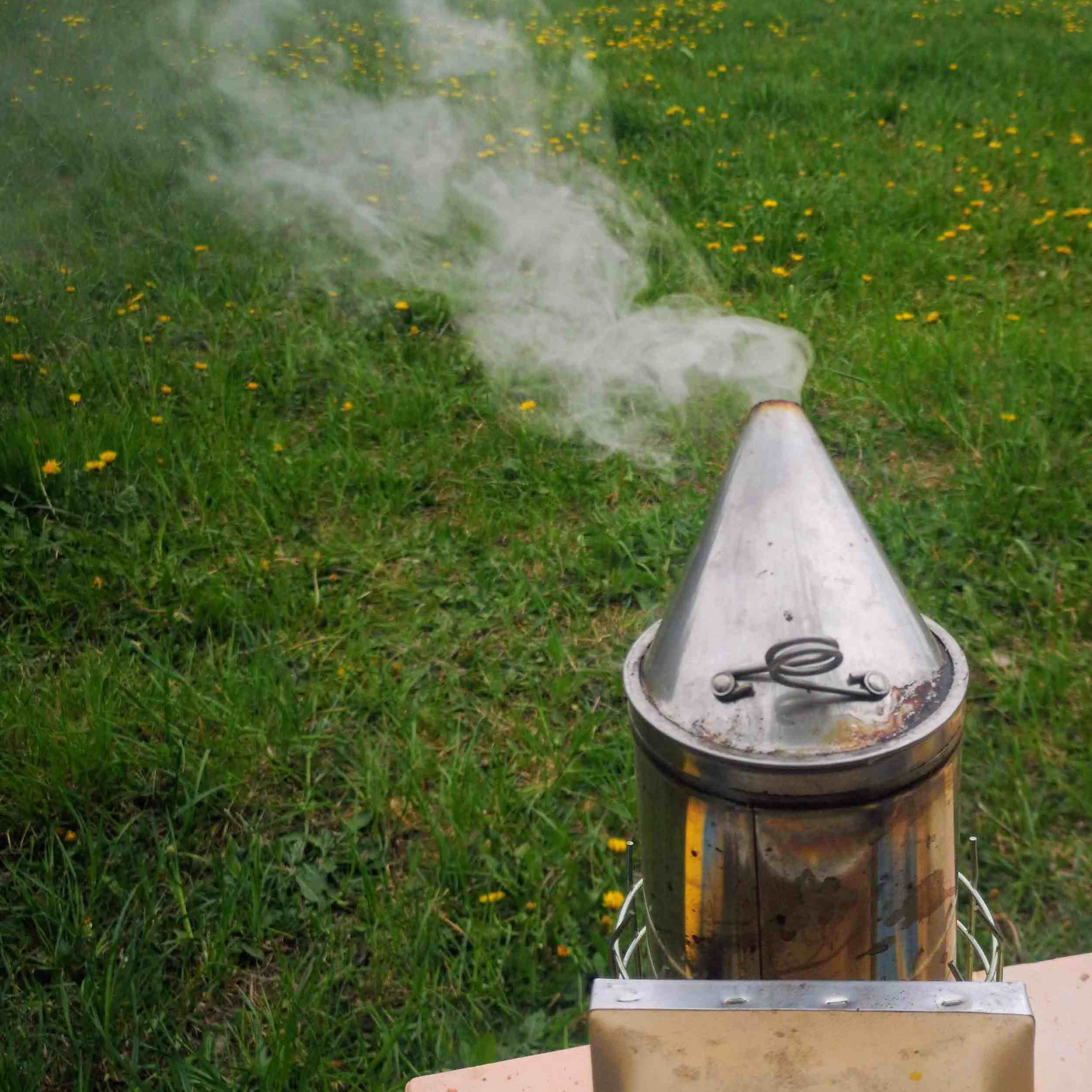
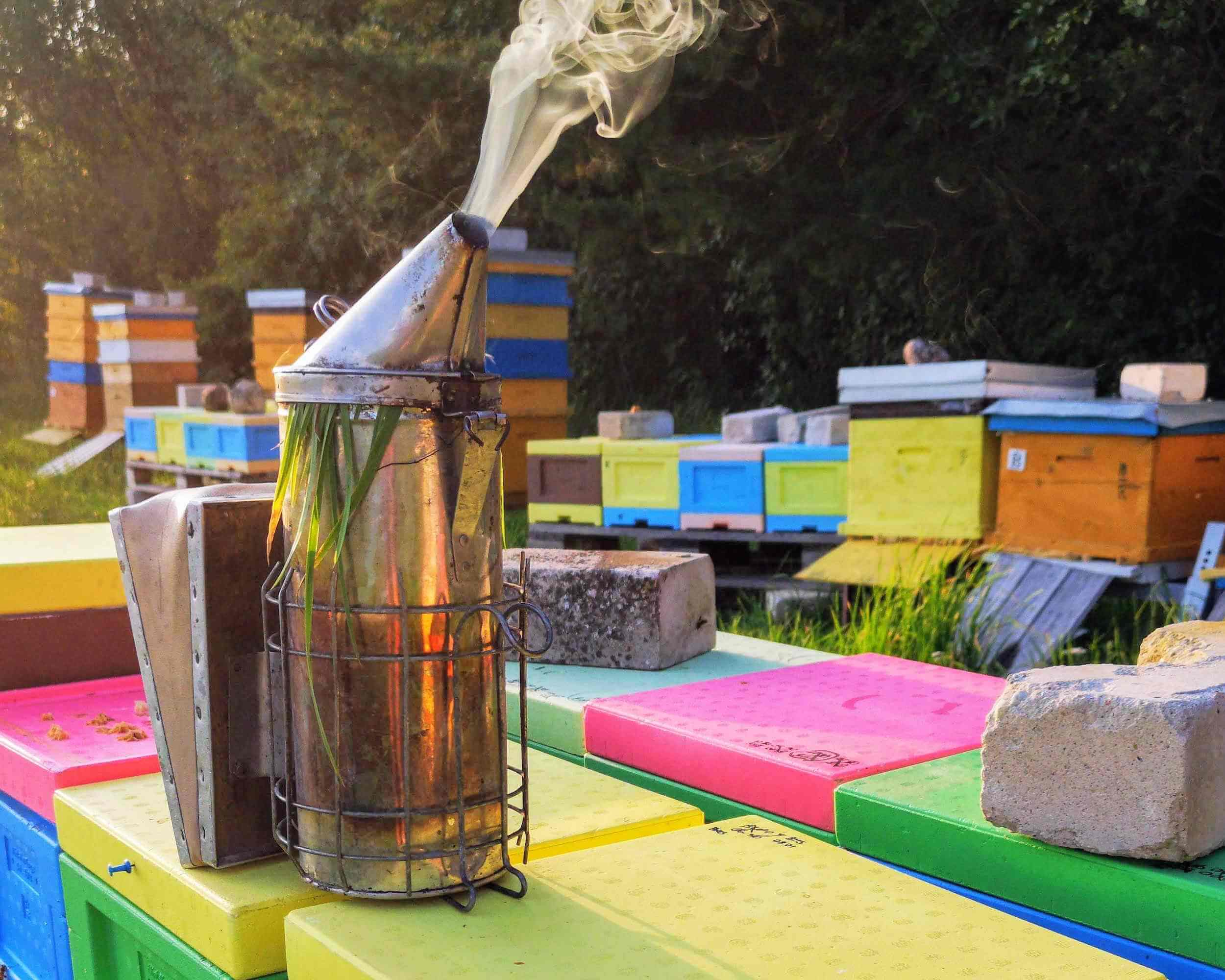
Just as a king is recognised by his crown and his coat, so bees need royal regalia to recognise their master and to welcome and greet him with kindness. Since ancient times, bees have been greeted with smoke. How? You can build a huge bonfire next to the hives and wave your hands to blow smoke towards the bees, or you can buy another beekeeper’s tool – a smoker – and do it much more easily. If you put dry wood in the smoker and light it on fire, you’ll have enough smoke to pump through the special hole in the smoker without having to burn down half the woodshed just to look at the hive. However, no matter how nicely you greet the bees when you smoke, they may take the wrong wing when they leave the hive and try to sting you, so it is a good idea to have a beekeeper’s outfit when you first start beekeeping, like a king’s cloak and crown. Only the crown here is jewel-less and far too big. As bees are highly educated insects, when they launch a coup against the king, they attack where it is easiest to blind them and say goodbye to their host forever – in the openings of the body: the mouth, the nose, the ears. And indeed, if a bee stings your throat from the inside, you can be in a lot of trouble catching every breath of air. That’s what the beekeeper’s overalls and hat protect against. How to choose the right ones – look for comfortable clothes that don’t interfere with movement, but don’t follow the fashions and buy one size up, as it’s easy for bees to squeeze their tiny stings through tight trousers.
Paskutinis, tačiau ne mažiau reikalingas bitininko atributas – medsukis. Žinoma, galima honey iš korių spausti rankomis, kaip kad vynuoges vynui traiškyti kojomis, tačiau medsukio pagalba tai ne tik efektyviau, bet ir patogiau pačioms bitėms. Medsukyje centrifūgos pagalba išsukus honey, medaus rėmai ir juose nulipdytas korys lieka beveik nepažeisti. Tokius korius mes grąžiname bitėms ir taip sutaupome joms kelias paras darbo statant naujus. Idealu, jei rėmai dedami į tą patį avilį iš kurio jie buvo paimti. Senuosius rėmus bitės išvalo, sulaižo dar likusį honey ir susandėliuoja jį korio viduryje bei pradeda naują medunešį.
Bee hunting
Where to get exotic animals? In a shop, you say? Unfortunately, you won’t find bees there. And that’s a good thing. You can only buy bees from beekeepers who breed bees, or you can hunt them down in the field. Keeping bees may not be the easiest way to become a beekeeper, but it is fun!
Honey bees should be hunted on a warm day before midday, when the honey harvest is at its most active and strong colonies split in half. Then some of the hive’s bees fly off with the new queen in search of a better life. They fly and land on a tree branch in the middle of the swarm to hide the queen. Meanwhile, a few scout bees go in search of a new home for the colony. Ideally, they will find your empty and well-equipped hive and take up residence there. But if you don’t want to wait or don’t have the time, you can catch a swarm of bees by spotting them.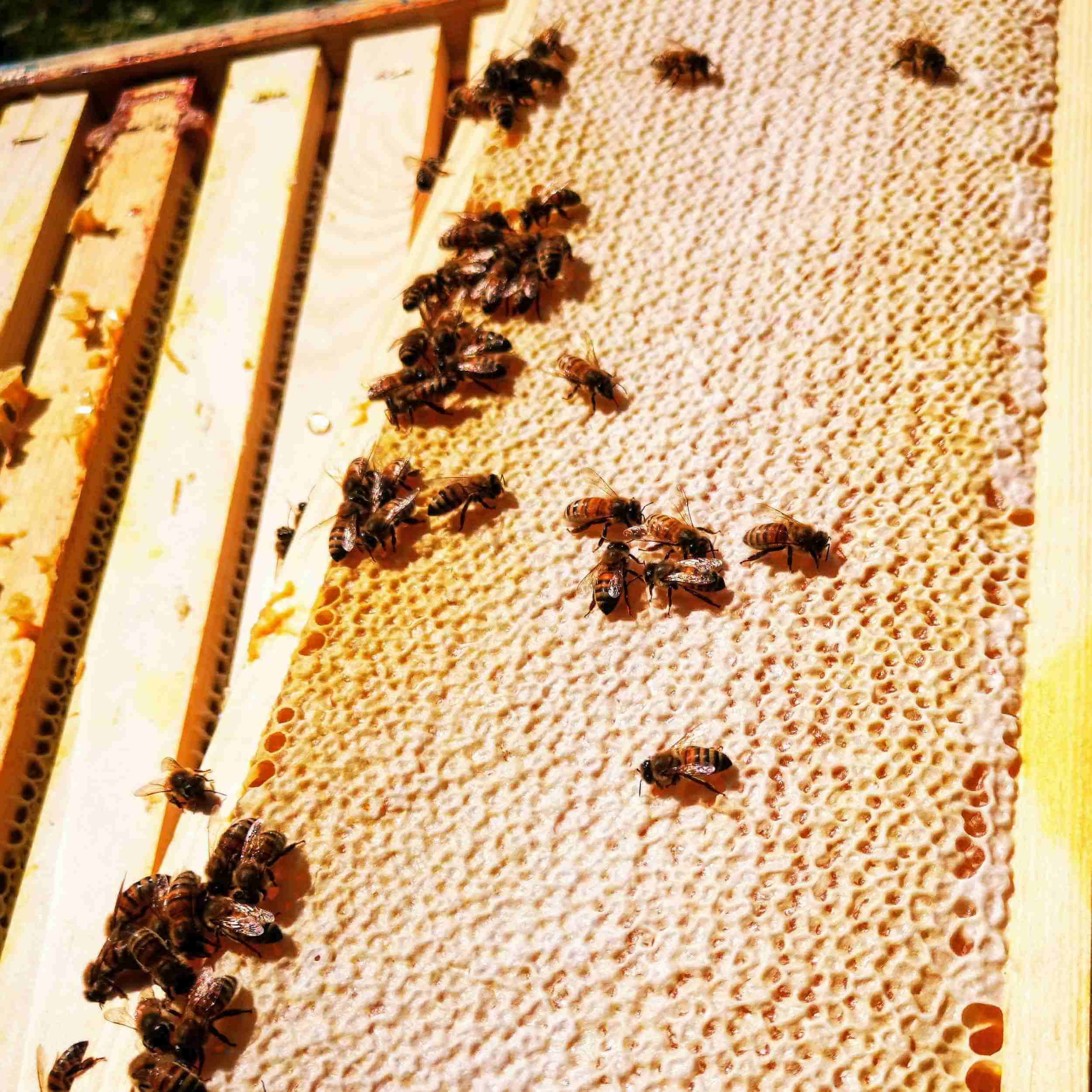
If a swarm is spotted (and it is a small swarm of about 30 000 bees), the bees should be immediately disarmed so that they will take off when they want to and not fly away – spray them with plenty of water. The water makes the bees’ wings stick together and they cannot fly for some time. This way your catch will not disappear while you are preparing the trap. Once you have prepared the trap (a small hive with a few combs), drop a ball of bees into the trap with a few movements. Of course, you won’t be able to catch all the bees, so you can leave the swarm near the tree during the day – the remaining bees will fly back to their colonies in the evening. After sunset, you can seal your hive safely and take your catch home.
Nenorintiems būti aukštalipiais ir kaip Tarzanas karstytis medžiais, ant kurių turpi bičių spiečius, galite iš anksto į medžius įkelti kelias spietines su bičių medumi ir žolelėmis (labai tinka melisos), kurios skleistų bičių mėgiamą kvapą ir viliotų jas užsukti spietinėn. Kai pats bičių spietimo metas į tokią spietinę, ypač jei šalia yra kitas bitynas ar miškas, naujas bičių spiečius įsikurti gali ir per kelias dienas. Stebėkite spietinę nuolat ir vos pamatysite ten spiečių – vakare užsandarinus angas galėsite jį perkelti pas save.
Perhaps the easiest way is to buy a colony from a reputable beekeeper. This colony will not only already be solid, but will also have some food reserves. The 6-8 frame colonies now on sale are strong enough. In addition, these colonies already contain a quality queen with a label, so you can easily find her in the hive and avoid accidentally taking her life. In addition, catching bees in the field can also catch the bee itself – there are some very aggressive bee species that will not be easy prey when you first start beekeeping, and you can also bring back unwanted bee diseases. If you buy a colony of flyers, you can choose which you prefer, which is more convenient or understandable, and ultimately more beautiful, based on the variety. The beekeeper will also give you lots of advice on where to start and how to become a good beekeeper.
Hive garden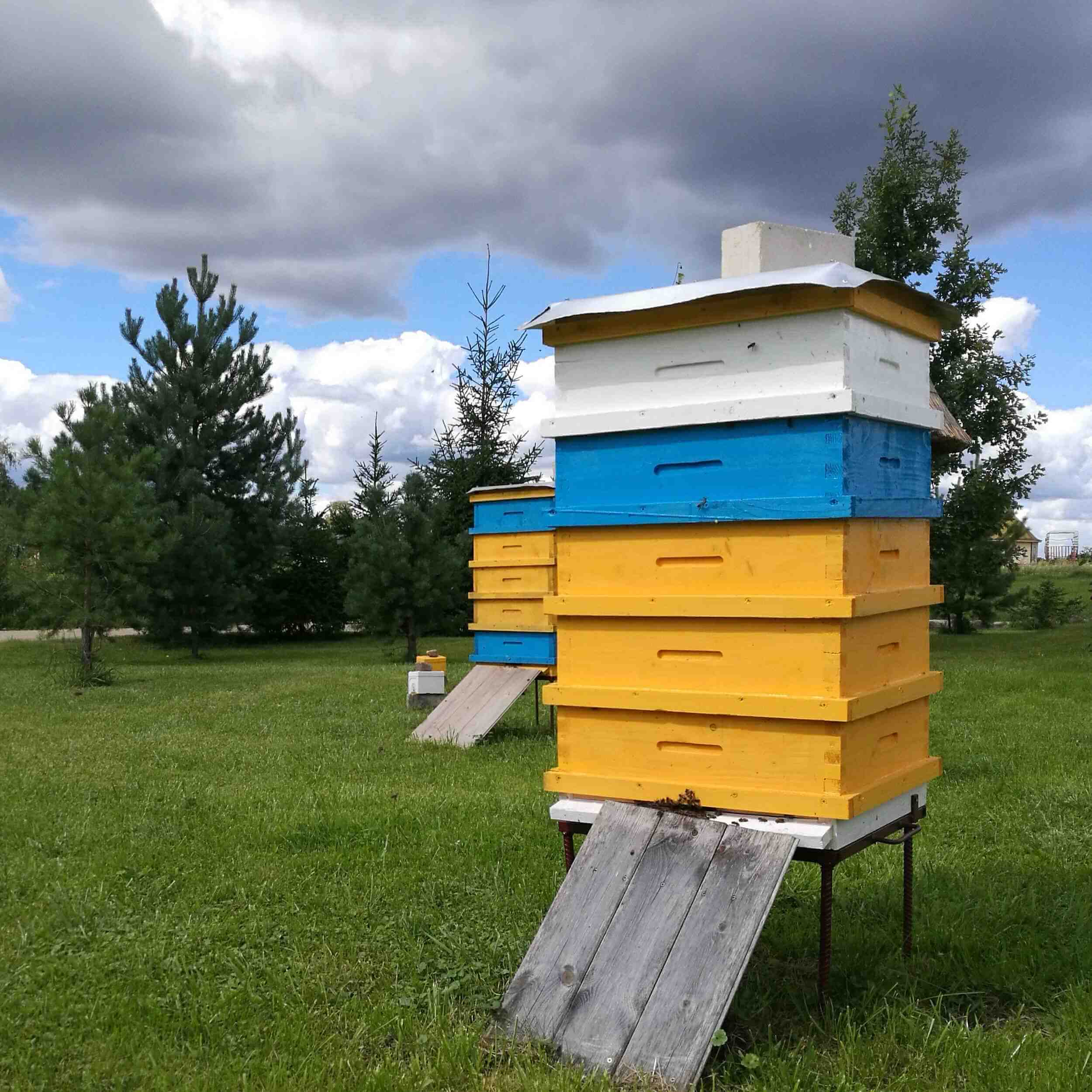
If beekeeping is just a hobby for you, or just another thing you’ve decided to try, you might think that one hive is enough to get you started. However, beekeepers advise you to have at least three first hives. It is not uncommon for colonies to weaken or even die, and having three hives will help you to reinforce a weak colony with new brood and save it. If you do not make your own hives according to our description, we suggest you buy multi-storey hives. These have the advantage over the Dadan hives in that the colony can be expanded indefinitely by putting a new honey storey on the roof. Also, bees prefer to climb upwards rather than expanding their combs sideways, so multi-storey hives will produce more honey and cause less stress for the bees.
It is best to move the bees into their new hives in the evening, in warm weather in May or June. Young beekeepers often open the hives to check that the bees are well, so if the weather is cool, the young colony can catch a cold and weaken. If you have brought the bees from a neighbouring house or tree (less than 3 km away), it is necessary to keep them in the dark for a few days, which magically erases the bees’ memory and stops them trying to find their old home. After the memory wipe, we put the bees in the hive and make sure to feed them with sugar syrup. Who knows how many days they will wander around without food and whether tomorrow will be clear or rainy. Bees are very sensitive to food shortages, and in their new home they only have enough food reserves to fill their stomachs, so the sugar syrup in the feeder on the roof of the hive will be a nice housewarming gift.
Newly settled bees live in single-storey hives. This floor is also known as the nesting floor, because it is where the queen bee is located. This is the “untouchable” floor, from which neither honey nor other goods are ever taken. When the bees seem to be stronger and occupy more than half of the storey, it is possible to put another storey, the honey storey, on top of the nesting storey, after the queen bars have been placed. You will be able to taste the honey on this floor.
The deliciousness of that gingerbread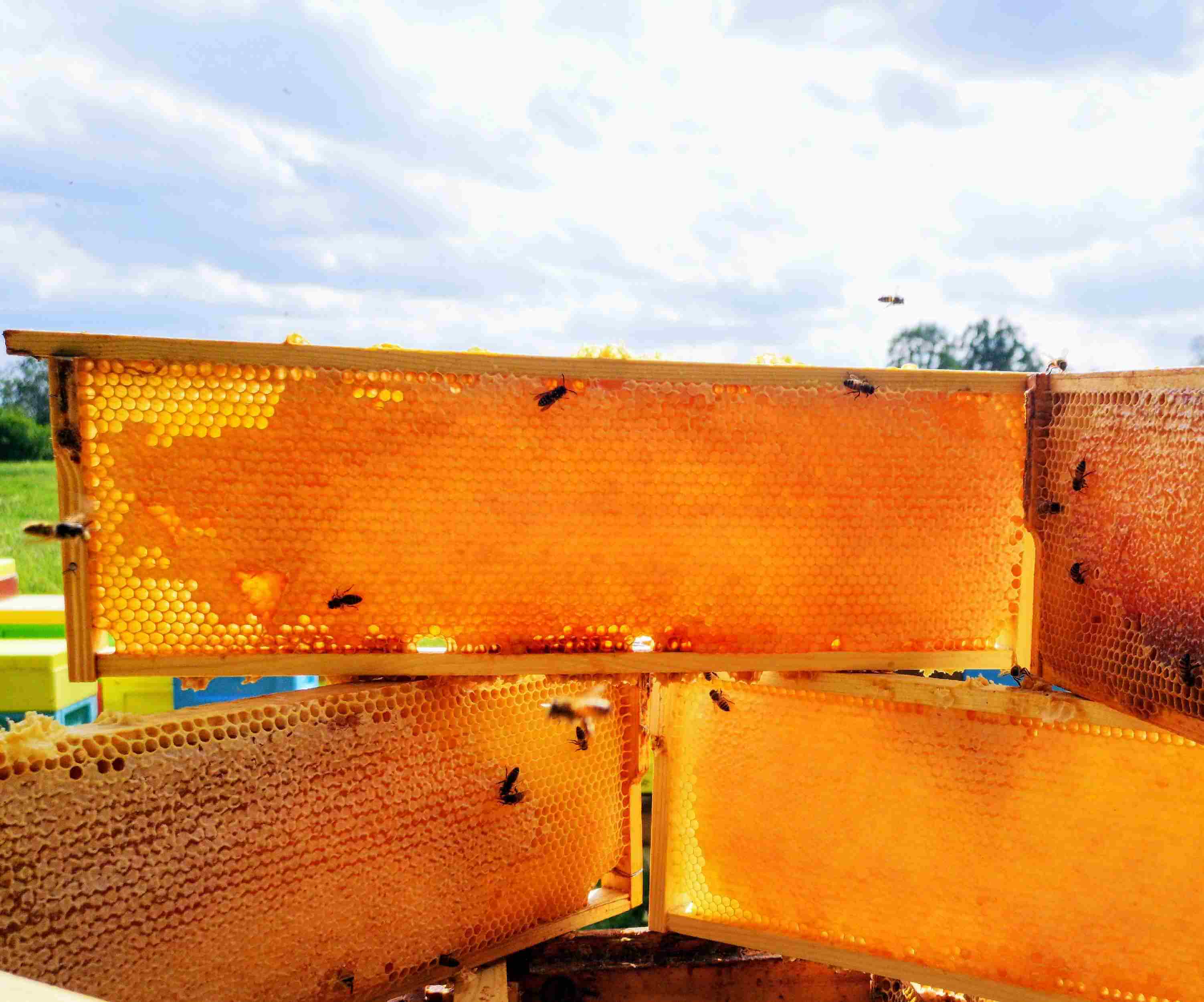
Tik pradėję bitininkauti, ko gero, jau po savaitės kitos norėsite sulaukti šviežio medaus. Patyrę bitininkai pataria neskubėti. Medų ilgam laikymui ir tik iš medaus aukštų galima sukti tada, kai pripildytas beveik visas honeycomb ir užakiuota daugiau nei du trečdaliai akučių. Akučių uždengimas – bičių ženklas, jog medus jau pakankamai subrendęs ir išdžiūvęs, kad galėtų būti laikomas ne vienerius metus. Medų išsukus per anksti teks jį vartoti labai greit, nes jis gali net surūgti.
If you have found the right combs, congratulations, you will soon be able to taste the fruits of your beekeeping!. If you are not going to eat the honey with comb, you must unstick the frames with a special honey comb fork before placing them in the honey extractor. This is the only way to properly extract most of the honey. Pour the extracted honey from the honey extractor into a bucket and strain it so that no honey remains bee pitch ar vaško likučių, supilstykite į stiklainius ir laikykite vėsioje vietoje. Kiek ilgai? Kol panorėsite ko nors gardaus… ? Vėliau šis medus gali būti naudojamas ne tik įprastai, bet ir įvairiuose gaminiuose, pavyzdžiui, guminukuose.