


Blog
As in the hive, so on earth

Stebėdami aplink skraidančias bites retai susimąstome, kiek daug jos turi bendro su mumis. Dažnai vabzdžius linkę laikyti primityviais padarais, veikiančiais vien instinktais. Tačiau kuo daugiau apie bites sužinome, tuo aiškiau tampa – jų pasaulis gerokai sudėtingesnis, nei gali pasirodyti iš pirmo žvilgsnio.
Bitės yra socialūs vabzdžiai, gyvenantys sudėtingoje bendruomenėje, kur bitės, pasiskirsto pareigomis, rūpinasi jaunąja karta, saugo savo namus ir net perduoda informaciją viena kitai. Visa bičių šeima veikia tarsi vienas gyvas organizmas, kuriame kiekviena bitė turi savo svarbų vaidmenį. Ir kuo daugiau laiko praleidi prie avilio, tuo dažniau pagauni save galvojant – kai kuriais dalykais žmonės ir bitės panašesni, nei norėtume pripažinti.
Todėl šiame straipsnyje norime parodyti, kiek daug bendro turi žmogaus ir bičių pasaulis. Galbūt po jo į bites pažvelgsite visai kitaip.
As the queen says, so the bees will do
I’ve probably heard the saying “Happy wife – happy life”. We often unwittingly cringe at such tragicomic feminist pronouncements, like something out of the cult film Married with Children, but in the world of bees, this is one of the most basic rules. Although there are up to 80 000 workers in a hive, they all obey that one queen as if they were one. The great lady of the house neither eats, grooms herself nor digs for honey – after a short Honey A month old with a few drones, she spends all her days spreading good (if you’re lucky) cheer around the hive and laying eggs. Now there’s a real multiparent mum! And everything depends on her majesty in the hive, just like on the mother in the family: a mean queen, mean daughters; a messy queen, no one will keep the hive clean; a slow eater, expect a lower honey harvest; and finally, if she is very pretty and colourful, her little daughters will be colourful and pretty, too. In fact, the queen teaches them good manners without spanking or other punishments – she uses her good example (or rather her special pheromones) to infect the other bees in the hive, and the mood spreads throughout the hive. Would there be a queen bee who would not want such obedient children?
Bee School
Bees collect honey and pollen iš įvairiausių pievų ir laukų. Jos niekada nepaklysta, jos žino, ant kokių augalų nutūpti, jos tobulai įvaldžiusios šį amatą. Tačiau iš kur bitės visą tai moka? Pasirodo, jos mokosi, kaip ir mes, mokykloje – „bičių mokykloje“. 21 days after laying an egg, a young worker bee hatches. Like a white sheet of paper (young bees are really “grey”!), she’s all bark. Responsible bees won’t let this little bee roam the meadows on her own, so she has a lot to learn before she can leave home.
1-2 days
The bee familiarises herself with the hive and cleans her cell and other empty holes so that honey can be poured into them or new eggs can be laid.
3-13 days
Apsitvarkius jau galima kibti į rimtesnius darbus. Mažylės bitutės pradeda rūpintis kitomis kartomis: maitina naujas lervutes, maitina ir šukuoja karalienę (Karališkoji Didenybė daug ko negali padaryti pati) ir padeda pavalgyti jauniems tranams (kokie jie lepūs!). Po vizito pas karalienę bitės darbininkės taip pat išnešioja labai svarbų jos išskiriamą feromoną po avilį, kad visi žinotų, jog karalienė gyva, sveika ir nereikia augintis naujos valdovės. Jaunos bitutės taip pat pašalina mirusias bites, nunešdamos jas kuo toliau nuo avilio. Taip jos namus apsaugo nuo pavojingų ligų. Neatsitiktinai ir žmonės nuo seno vertina natūralią bičių apsaugą – vienas žinomiausių bičių produktų yra bee pitch (propolis), garsėjantis savo natūraliomis savybėmis.
8 – 18 days
Teenage bees are trusted with more responsible jobs. They take over the nectar from the bees that carry it and pour it into the hive’s wells, storing pollen. They are also air-conditioned, using their wings to ventilate the hive and keep it at the right temperature and with the right air circulation. Another important function associated with the flapping of the wings is the thickening of the nectar, where gusts of air remove water from the nectar and encourage it to turn into honey.
12 – 35 days
On the 12th day of life, the bee is mature enough to start producing wax. Young queens work as builders, among other jobs appropriate to their age. They make perfect hexagonal brood boxes and enlarge the hive, as well as repair damaged brood boxes and “cover” them with larvae or honey.
18 – 21 days
This time is very important. It is the time when the bees perform their last duties before heading out into the fields – protecting the hive from intruders. This is a kind of compulsory military service for bees. They squeeze in at the entrance to the hive and keep a watchful eye out for anyone who wants to get inside. Since there are countless bees living in the hive, it would be impossible to remember their faces, so the bees distinguish each other by the smell of their hive. When bees detect an intruder, they attack it with their stinger. More than one of them is killed in the line of duty.
22 – 42 days
Paskutinis bitės gyvenimo darbas, kurį ji atliks iki mirties – nektaro nešimas. Per pirmuosius skrydžius bitutė apsižvalgo – suka vis didesnius ratus aplink avilį ir įsidėmi jai svarbius orientyrus, kad nepaklystų. Taip ji savo vaizduotėje susiprogramuoja tikrą „Google maps“ ir visada atranda kelią namo. Kuo ilgiau skraido – tuo toliau nektaro rinkėja gali nuskristi. Galiausiai ji išmoksta šokti ir savo pilvo šokiu praneša kitoms bitėms apie nektaro pilnus laukus. Būtent todėl žmonės nuo seno vertina bičių sukuriamas gėrybes, o šiandien vis dažniau renkasi ir guminukus su medumi kaip patogų būdą įtraukti bičių produktus į kasdienę rutiną.
Although worker bees only live for about six weeks in summer, they master a wide range of tasks during this period. Would you like to go to such a bee “school”?
A bee needs a bee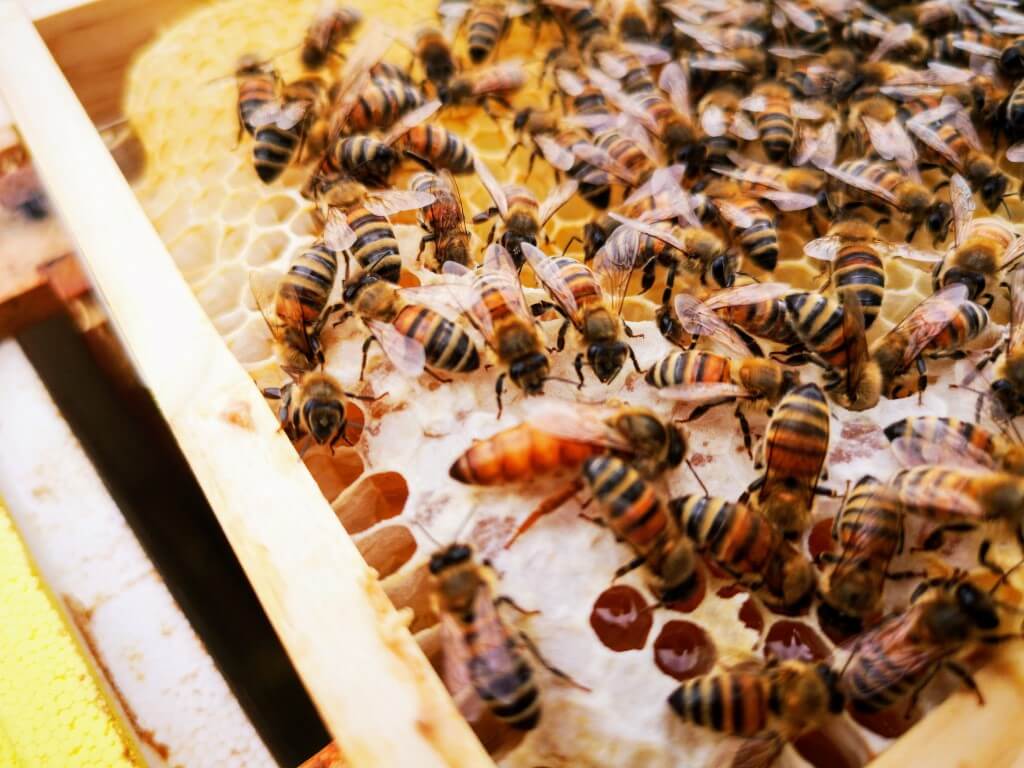
A bee needs a bee – just like a person needs a person. Bees are distinguished from all other insects and even many animals by their sociality. The whole hive is like a big social community, where everyone has a role to play and cannot function without the help of others. This similarity of bees to humans is driving scientists’ growing interest in these small, complex insects. It turns out that we have much more in common with these little bees than with some huge whales. This similarity may not please many people, but it makes you want to boast that you’re “as industrious as a bee”. Congratulations, now you can boast that you are even genetically similar. The honey bees and we great minds have similar genes responsible for social behaviour. This discovery, scientists hope, may help to investigate or even solve a number of mental health problems related to the decline and alteration of higher brain functions: there are those who believe that the mysteries of how Alzheimer’s, schizophrenia, dementia, depression, and other behavioural disorders are caused, modified and cured will be solved soon. Moreover, scientists believe that bees also hold the miracle of longevity, since a queen bee can survive up to five years when she is reproductively active, while her young daughters “earn their keep” in about six weeks. So perhaps soon we will be thanking these hard-working women not only for their honey, but also for a healthier, longer and happier life.
The big heart of a small insect
In fact, bees don’t have a heart as we imagine it – just a few muscular tubes that pump blood. And yet, whether by genes, pheromones or instinct, bees defend their colony with all their hearts and, in the truest sense of the word, with their lives. The little flying bee, which we usually see darting around and squatting from flower to flower, will even stand up to a huge bear if it senses a threat to its home. Meanwhile, we, the brilliant creatures, the big brains who invented electricity, the computer and the 5G Internet, sometimes manage not only to create but also to destroy. So, wouldn’t it be so bad to be a bit more like bees? After all, there is so much to learn from them: diligence and care, dedication, helping our neighbours, humility, thoughtfulness and, after all, loyalty. It is not for nothing that Alexander Duma’s musketeers used to say: “One for all, all for one”. Well, we would add, more often than not, let it be as in the hive, so on earth.