


Blog
Bee School


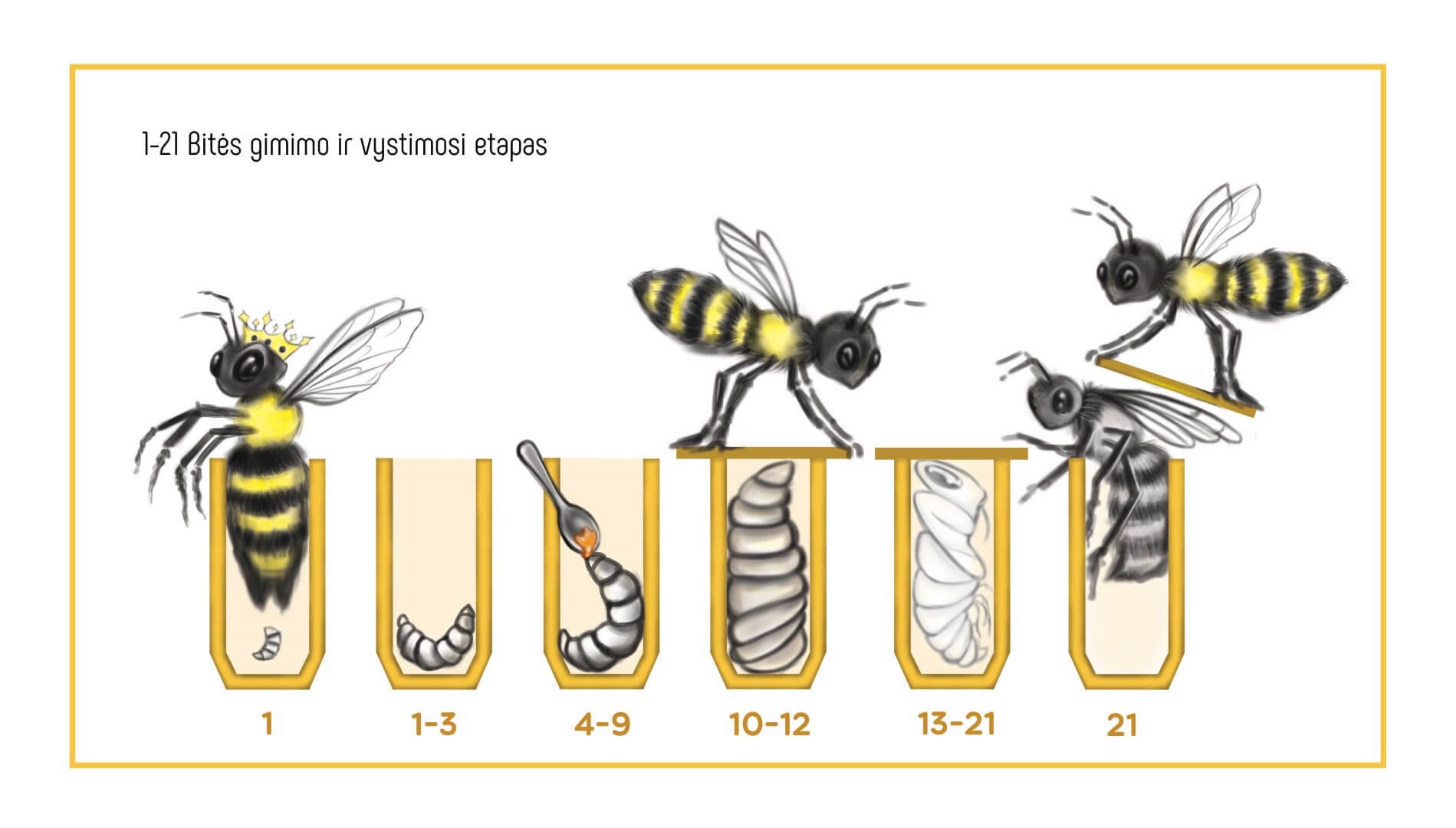
Bitės gimsta mokėdamos ne viską. Kaip ir mes, jos pradeda nuo pačių paprasčiausių darbų, o tik vėliau tampa patyrusiomis savo srities specialistėmis. Skirtumas tik tas, kad visa jų „karjera“ telpa į vos kelias gyvenimo savaites.
Jauna bitė pirmiausia tvarko avilį, vėliau rūpinasi lervutėmis, maitina motinėlę, stato korius, saugo namus, o galiausiai tampa nektaro rinkėja. Kiekvienas etapas turi savo paskirtį, o nė vienas darbas nėra atsitiktinis.
Šiame straipsnyje pakviesime pažvelgti į bičių gyvenimą tarsi į neįprastą mokyklą, kurioje kiekviena diena reiškia naują pamoką, naują atsakomybę ir dar vieną žingsnį link svarbiausios misijos – rūpintis visa bičių šeima.
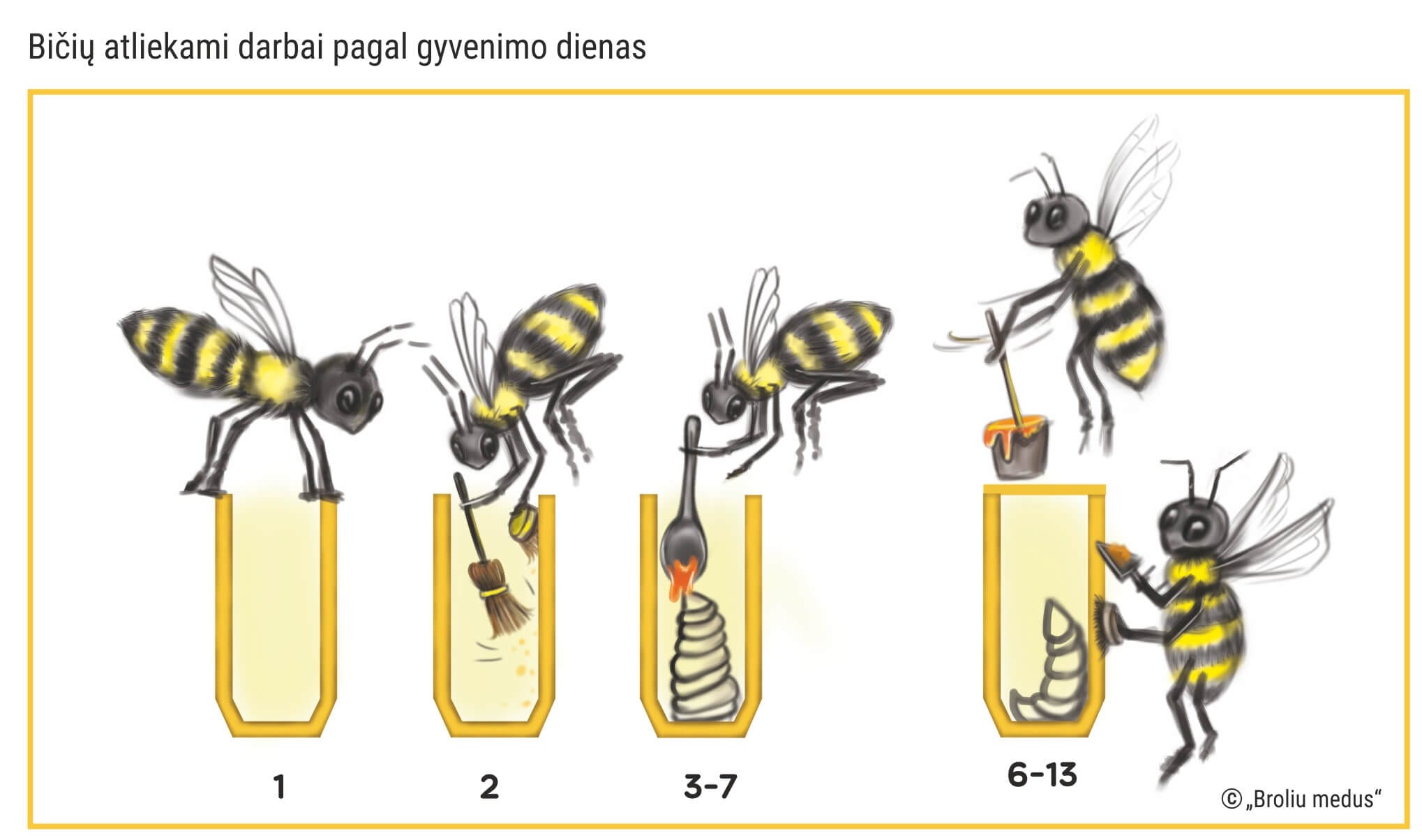
1-2 days
Bitutė susipažįsta su aviliu, atlieka savo celės ir kitų tuščių akučių valymo darbus, kad į jas būtų galima supilti honey ar padėti naujus kiaušinėlius.
3-13
Apsitvarkius jau galima kibti į rimtesnius darbus. Mažylės bitutės pradeda rūpintis kitomis kartomis: maitina naujas lervutes, maitina ir šukuoja karalienę (Karališkoji Didenybė daug ko negali padaryti pati) ir padeda pavalgyti jauniems tranams (kokie jie lepūs!). Po vizito pas karalienę bitės darbininkės taip pat išnešioja labai svarbų jos išskiriamą feromoną po avilį, kad visi žinotų, jog karalienė gyva, sveika ir nereikia augintis naujos valdovės. Jaunos bitutės taip pat pašalina mirusias bites, nunešdamos jas kuo toliau nuo avilio. Taip jos namus apsaugo nuo pavojingų ligų. Avilio apsaugai bitės pasitelkia ir bičių pikį (propolį) – natūralią medžiagą, kurią naudoja plyšiams sandarinti ir avilio higienai palaikyti.
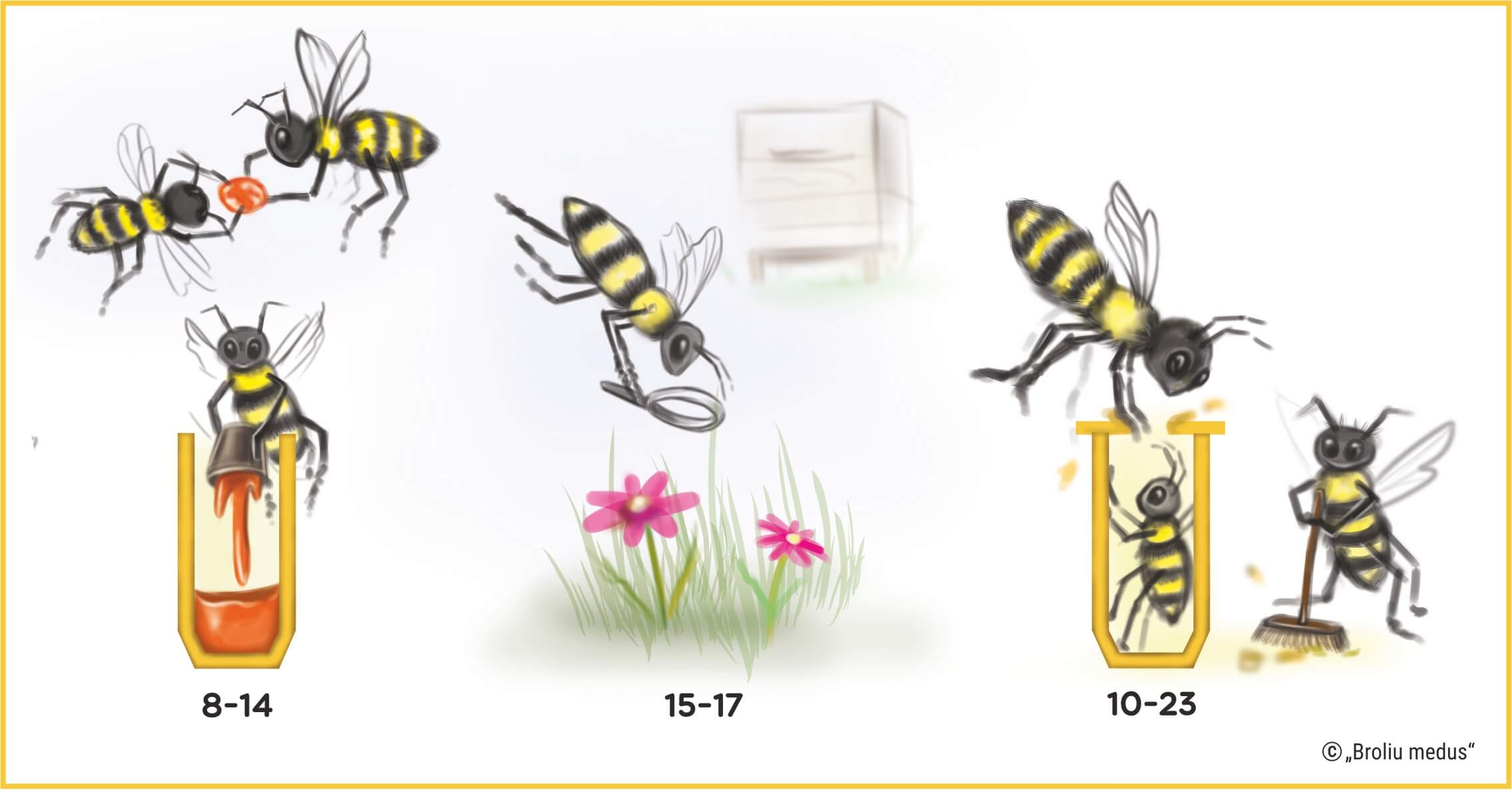
8 – 18 days
Teenage bees are trusted with more responsible jobs. They take over the nectar from the bees that carry it and pour it into the hive’s eyes, store it in pollen. They also work as an air conditioner, ventilating the hive with their wings and keeping it at the right temperature and air circulation. Another important function associated with the flapping of the wings is the thickening of the nectar – the air gusts remove water from the nectar and encourage it to turn into honey.
12 – 35 days
On the 12th day of life, the bee is mature enough to start producing wax. Young queens work as builders, among other jobs appropriate to their age. They make perfect hexagonal brood boxes and enlarge the hive, as well as repair damaged brood boxes and “cover” them with larvae or honey.
18 – 21 days
This time is very important. It is the time when the bees perform their last duties before heading out into the fields – protecting the hive from intruders. This is a kind of compulsory military service for bees. They squeeze in at the entrance to the hive and keep a watchful eye out for anyone who wants to get inside. Since there are countless bees living in the hive, it would be impossible to remember their faces, so the bees distinguish each other by the smell of their hive. When bees detect an intruder, they attack it with their stinger. More than one of them is killed in the line of duty.
22 – 42 days
The last job a bee will do before it dies is to carry nectar. During her first flights, the bee looks around – making bigger and bigger circles around the hive and taking in landmarks that are important to her to avoid getting lost. In this way, she creates a veritable Google map in her imagination and always finds her way home. The longer she flies, the further the nectar collector can go. Eventually, she learns to dance and uses her belly dance to tell the other bees about the nectar-filled fields.
Nors vasarą bitės darbininkės gyvena tik apytiksliai šešias savaites, per šį laikotarpį jos įvaldo daugybę darbų. Būtent jų kruopštus darbas leidžia džiaugtis ne tik medumi, bet ir įvairiais jo gaminiais, pavyzdžiui, guminukais. O Jūs, ar norėtumėte pabuvoti tokioje blic „mokykloje“?