


Blog
Homemade gummies: recipes, tips and cooking secrets

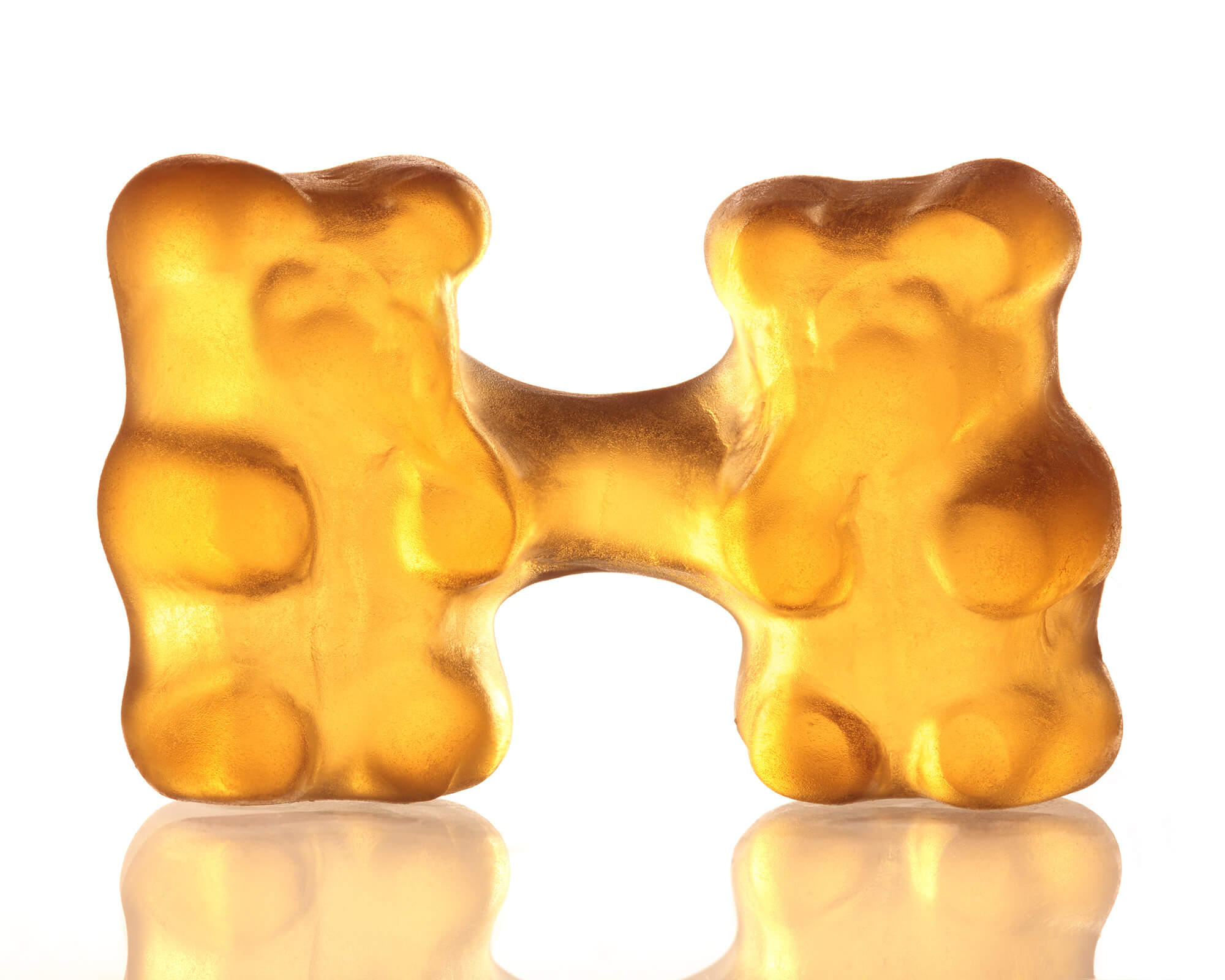
Homemade gummies is one of the easiest homemade sweets to make, with just three ingredients and 15 minutes in the kitchen. The result: chewy, colourful treats with no artificial additives, loved by children and adults alike.
Store-bought gum often contains synthetic colours, preservatives and excess sugar. But what if you could make a sweet from natural juices and real honey? At home, every ingredient is at your fingertips, so it’s easy to adapt the recipe, even for allergy sufferers or vegans.
Here you will find three different recipes, ranging from the classic one with gelatine to the vegan one with agar. Plus, you’ll learn how to achieve that chewy, elastic texture, what proportions to use and how long homemade gummies last in the fridge.
Why make homemade gummies at home?
Homemade gummies give you complete control over the ingredients: no artificial colours, preservatives or synthetic flavours, which are typical of the products on the shelves. Instead of refined sugar, you can choose natural sweeteners: honey, maple syrup or agave syrup.
This is especially true for parents. Knowing every ingredient, they can offer their children a sweet treat without remorse. And the flavour possibilities are practically endless: fresh strawberries, blueberry puree, cherry juice or unexpected combinations with citrus.
Kad kokybiški guminukai iš natūralių ingredientų nėra utopija, patvirtina ir rinkos pripažinimas. „Brolių medus” gaminukai „Broliai lokiai”, pagaminti iš vaisių sulčių ir medaus, pelnė aukso medalį parodoje „Rinkis prekę lietuvišką 2022″. Tai rodo, kad natūrali sudėtis ir puikus skonis puikiai dera tarpusavyje.
Ingredients for homemade gummies: gelatine, agar, sweeteners and moulds
Each recipe for homemade gummies is based on three groups of ingredients: a solidifying agent (gelatine, agar or pectin), a liquid (fruit juice, puree) and a sweetener (honey, sugar, syrup).
Gelatine, agar and pectin: which to choose and in what proportions?
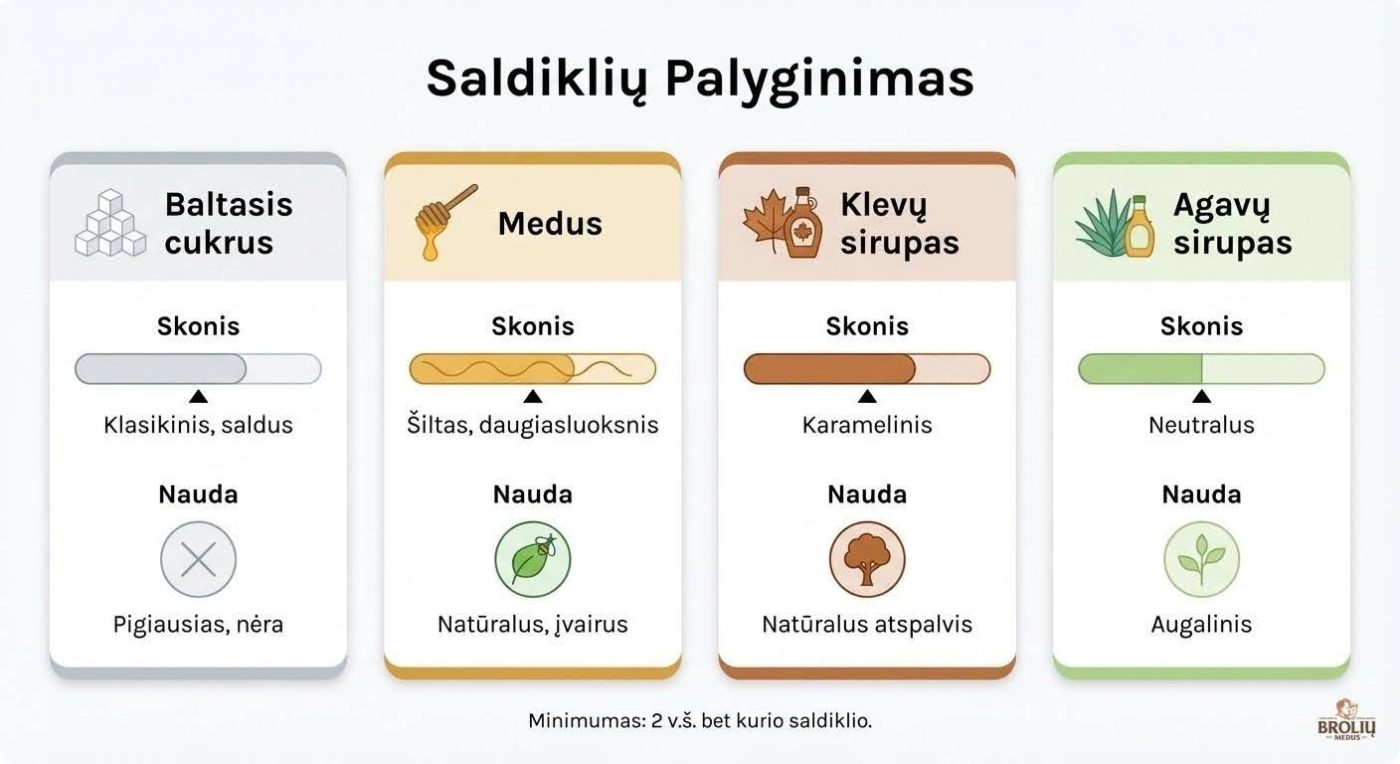
Gelatine is the most versatile choice, providing the elastic, chewy texture of a real gum. The chewy consistency requires approximately 18-20 g of gelatine in 250 ml of liquid. The type of gelatine is also important: granular and sheet gelatine differ in bloom value (setting strength), so the final texture is directly dependent on adherence to proportions.
Agar Suitable for vegans and vegetarians, but the products will be firmer and more fragile than if chewed. Proportion: 1 teaspoon agar powder in 250 ml liquid.
Pectin least suitable for gum trees. It works better in marmalade-type sweets, so gelatine or agar is recommended for beginners.
Sweeteners for homemade gum: honey, sugar and syrups
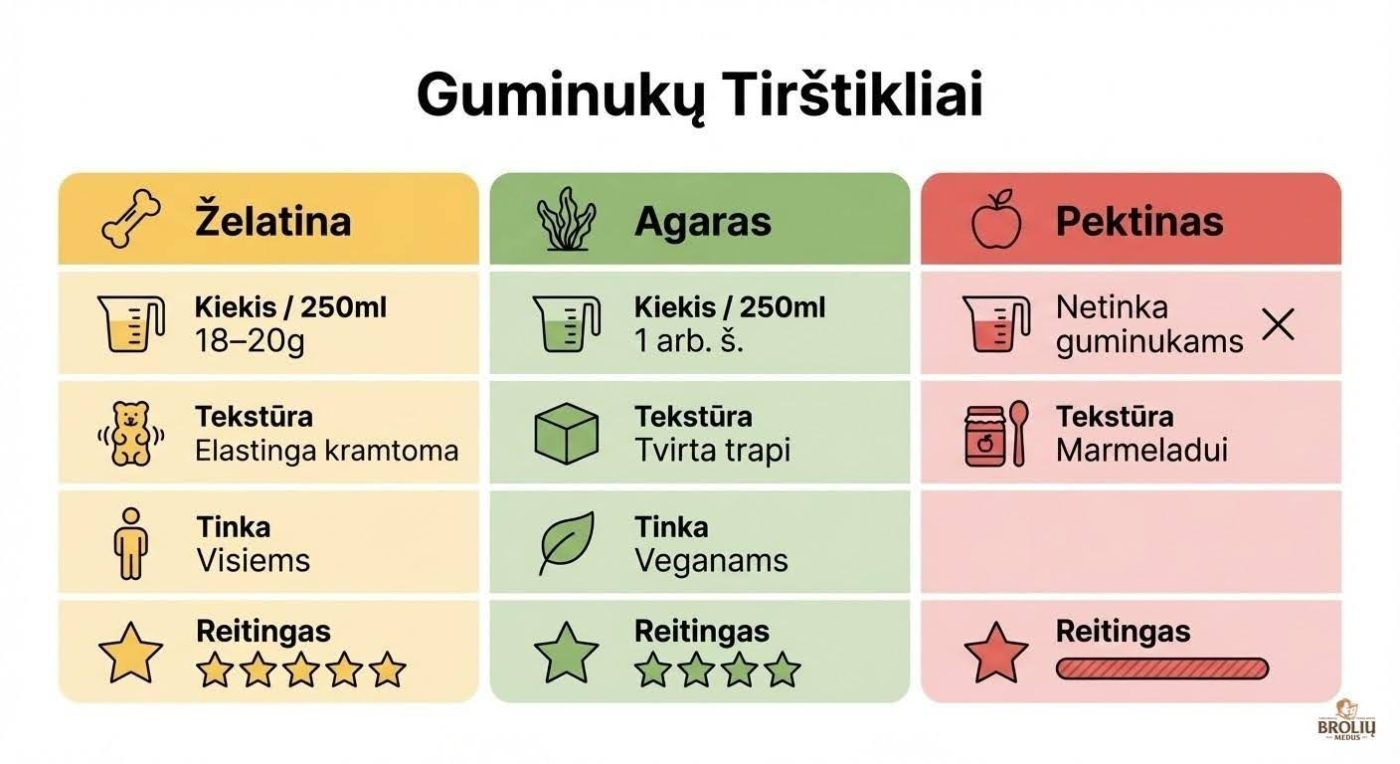
White sugar is the cheapest option, giving the classic texture and sweetness of gum, but without any additional benefit to the body.
Honey acts as a natural sweetener with a warm, distinctive taste. Different types of honey gives different shades, so it’s worth choosing according to the final taste you want.
Maple syrup and agave syrup are used in similar proportions to honey, but each adds a distinct character: maple syrup is caramel-like, agave is more neutral. Gummies made completely without sweetener will be sour, so at least 2 tablespoons sweetener is needed even in the healthiest version.
Homemade gum recipes: classic, sugar-free and vegan
Below are three recipe variations: classic with gelatine, sugar-free with honey and vegan with agar.
Classic homemade juice gummies with gelatine
Mix 250 ml of natural fruit juice (apple, cherry or orange), 18-20 g of gelatine and 2-3 tablespoons of sugar or honey. Heat the juice over low heat, add the gelatine and stir until completely dissolved. Do not boil, as the gelatine loses its firming properties.
Pour the prepared mixture into silicone moulds and refrigerate 2-4 hours, until the gummies are completely set.
Place them in the freezer for 10-15 minutes before removing them from the tins. Once chilled, the gummies shrink and detach more easily from the silicone walls.
Homemade sugar-free gummies: with honey or maple syrup
Mix 250 ml of fruit puree (strawberry or blueberry), 18-20 g of gelatine and 2-3 tablespoons of honey or maple syrup. Heat the puree, dissolve the gelatine and pour into silicone moulds. Refrigerate for 2-4 hours.
As well as acting as a sweetener, honey gives a warm, multi-layered flavour, so no additional sugar is needed. The result is most pronounced when you choose quality natural honey. Maple syrup is suitable for those who want a caramel shade and the proportions remain the same.
Vegan homemade gummies with agar
Mix 250 ml of juice or fruit puree, 1 teaspoon of agar powder and 2 tablespoons of agave syrup. Unlike gelatine, agar agar needs to be cooked: bring the mixture to the boil and cook for 2-3 minutes, stirring continuously, until the agar agar has completely dissolved.
Pour into silicone moulds and leave to set at room temperature or in the fridge.
The texture will be different from gelatine gummies: the agar version will be firmer and more brittle, like marmalade. Chewy elasticity is not expected, but it is the best plant-based option for those who avoid animal products.
How to achieve a chewy gum texture: tips from practice
The chewy, elastic texture depends on three factors: the amount of gelatine, the type of syrup and the drying after setting.
The proportion of gelatine makes all the difference. For a standard jelly, 10-12 g in 250 ml of liquid is sufficient, but for chewing gum you need 18-20 g or more. The more gelatine, the stiffer and more elastic the result.
Gliukozės arba kukurūzų sirupas nėra tik saldiklis. Būtent sirupas suteikia tą kramtomą „pull” pojūtį, būdingą pirktiniams guminukams. Be jo tekstūra liks panaši į paprastą želė, nesvarbu kiek želatinos naudosite.
And now for the secret that most recipes don’t mention. After 2-4 hours in the fridge, the gummies need drying 24-72 hours at room temperature on a wire rack or baking paper. This process removes surface moisture and produces a firm, slightly springy consistency. The best texture is achieved after 3-5 days in the open air.
Extra trick: a pinch of citric acid gives a brighter taste and slightly improves the final texture.
Storing homemade gum: how long and how to store correctly?
Homemade gummies keep in the fridge 1-2 weeks, if stored in a tightly sealed container or covered with cling film. In the freezer, the shelf life is extended to 2 months and thawing at room temperature is sufficient.
It is not worth leaving gelatine gummies in the room for a long time, as gelatine softens with heat and moisture.
You will recognise damaged gum by its sticky surface, unwanted smell or mould. If you notice any of these signs, do not use the whole batch.
The gummies can be coated with a thin layer of beeswax to help them detach from the moulds.
Frequently asked questions about pet gummies
Why are my homemade gummies too soft and jelly-like?
The most common cause is too little gelatine or a complete absence of syrup in the recipe. Increase the proportion of gelatine to 20 g in 250 ml of liquid, add at least a couple of tablespoons of glucose syrup and, most importantly, dry the gummies on a grill at room temperature for 24 to 72 hours after refrigeration.
How long can I keep homemade gummies?
The homemade gummies will keep for 1-2 weeks in the fridge and up to 2 months in the freezer when tightly sealed. The gelatine softens quickly at room temperature and is not suitable for longer storage without refrigeration.
Is it possible to make homemade gummies without gelatine?
Yes, agar agar is a plant-based alternative suitable for vegans. Agar gummies will be firmer and more crumbly and less chewy than gelatinous ones. The proportions and cooking process vary, so refer to the vegan recipe links above.
What are the best moulds for homemade gummies?
Silicone rubber moulds are the best choice as the flexible material allows easy removal without deformation. Silicone moulds for ice cream or chocolate are also suitable. Before pouring the mixture, brush the mould with a thin layer of coconut or neutral oil.
How are homemade gummies healthier than store-bought ones?
At home, you have full control over the ingredients: no artificial colours, preservatives or synthetic flavours. Refined sugar can be replaced by natural sweeteners such as quality honey or maple syrup. Sugar alcohols and artificial additives are often used in store-bought gum that are simply not present in the homemade version.
Naminių guminukų gaminimas tampa dar malonesnis, kai naudojate tikrai kokybiškas žaliavas. „Brolių medus” siūlo natūralų lietuvišką medų, kuris puikiai tinka kaip cukraus pakaitalas guminukų receptuose, o jų aukso medaliu įvertinti guminukai „Broliai lokiai” gali tapti ir įkvėpimu, ir gardžiu užkandžiu tiems, kas nori paragauti profesionaliai sukurto skonio.
Whether you’re making gummies for the first time or you’re already experimenting with flavours, quality ingredients make all the difference. Stop by „Brolių medus” parduotuvę and choose honey and natural gummies to give your table an authentic taste.